You have thousands of followers. You have high engagement rates. You are posting consistently. But when you look at your pipeline, the question remains: where are the leads?
This is the frustration facing many UK B2B Directors today. You have fallen into the Visibility Trap. This is the dangerous misconception that attention equals revenue. It does not. In the current B2B landscape, mistaking “likes” for commercial intent is a fatal error.
To fix this, you must fundamentally shift your operating model. You need to move from Social Media Marketing (broadcasting) to a technical Social Selling Strategy (closing). This guide provides the Standard Operating Procedure (SOP) to make that switch.
The 'Visibility Trap': Why Likes Don't Equal Revenue
The uncomfortable truth is that vanity metrics are easy to manipulate and irrelevant to your bottom line. A post with 10,000 views looks impressive in a boardroom presentation, but if those views are from low-intent casual scrollers, the commercial value is zero.
The data supports this skepticism. Research indicates that “Low Intent” leads (those who simply engage with content) have a conversion rate of less than 0.1%. In stark contrast, High Intent Revenue Opportunities (those nurtured through a proper sales protocol) convert at a rate greater than 25%.
If your current strategy focuses solely on reach, you are optimising for the 0.1%. You are building a media company, not a sales pipeline.

Social Selling vs. Social Media Marketing: The Financial Distinction
Before implementing a new workflow, we must define the terms, as they are often conflated.
Social Media Marketing is a one-to-many broadcast mechanism. It is designed to build brand awareness and distribute content to a wide audience. It warms the market.
Social Selling is a one-to-one or peer-to-peer closing mechanism. It is the process of using social networks to find, connect with, and nurture specific decision-makers.
Marketing creates the demand; Social Selling captures the value. If you have the former without the latter, you are effectively paying to warm up leads for your competitors to close.
The 'Dark Funnel': Where UK B2B Deals Actually Happen
Traditional attribution software is failing B2B businesses. It tracks clicks, but it cannot track conversations.
Current data suggests that 70% of the B2B buying journey is completed anonymously before a prospect ever reaches out to a sales representative. This activity takes place in the Dark Funnel. This is the untrackable ecosystem of peer-to-peer sharing. Private WhatsApp groups, Slack channels, and internal emails.
To win in the Dark Funnel, you must apply the Screenshot Test. Ask yourself: Is this piece of content valuable enough that a Director would screenshot it and paste it into their internal Slack channel with the caption “we need to read this”?
If the answer is no, your content is just noise.
The 4-Step Social Selling Framework (SOP)
To transition from broadcasting to deal-making, you need a structured workflow. This is not about “being social.” It is a technical process.
Step 1: Profile Optimisation (The Landing Page Mindset)
Effective LinkedIn social selling starts with your profile. It is not a CV; it is a landing page. When a prospect clicks on your face, they are looking for a solution to their problem, not a summary of your career history.
You must leverage Authority Bias. This is the neuromarketing principle where buyers inherently trust and follow those they perceive as Subject Matter Experts. Your headline, bio, and featured section must de-risk the purchase by proving your technical competence immediately. If you look like a generalist, you lose the deal.
Step 2: Signal Detection (Using AI & Intent Data)
Stop treating every notification equally. You need a protocol to distinguish between noise and signal.
You must define the difference between a Social MQL and a Social SQL. A Social MQL (Marketing Qualified Lead) is defined by Affinity. Likes, generic comments, and shares. The action here is to nurture, not pitch. A Social SQL (Sales Qualified Lead) is defined by Transactional Intent, asking about pricing, requesting a specific resource, or asking a technical question. The action here is an immediate response.
Step 3: The 'Zero-Click' Content Strategy
Most businesses post content designed to force a click, dragging the user off the platform to a blog or website. The algorithms hate this, and so do your users.
Research shows that 97.3% of post views on platforms like Facebook go to link-less updates. This is the argument for Zero-Click Content.
These are assets that offer valuable, standalone insights consumed natively on the platform without requiring the user to leave. By giving the value away upfront without an “ask,” you trigger Reciprocity. You give a gift of knowledge, creating a psychological debt that primes the buyer to comply when you finally initiate a sales conversation.
Step 4: The 'Commercial Pivot' (Closing the Loop)
This is the most critical step, and the one most UK businesses miss. You must have a defined SLA (Service Level Agreement) between your marketing activity and your sales response.
When a high-intent signal is detected, speed is the only variable that matters. Data shows that 78% of customers buy from the company that responds first.
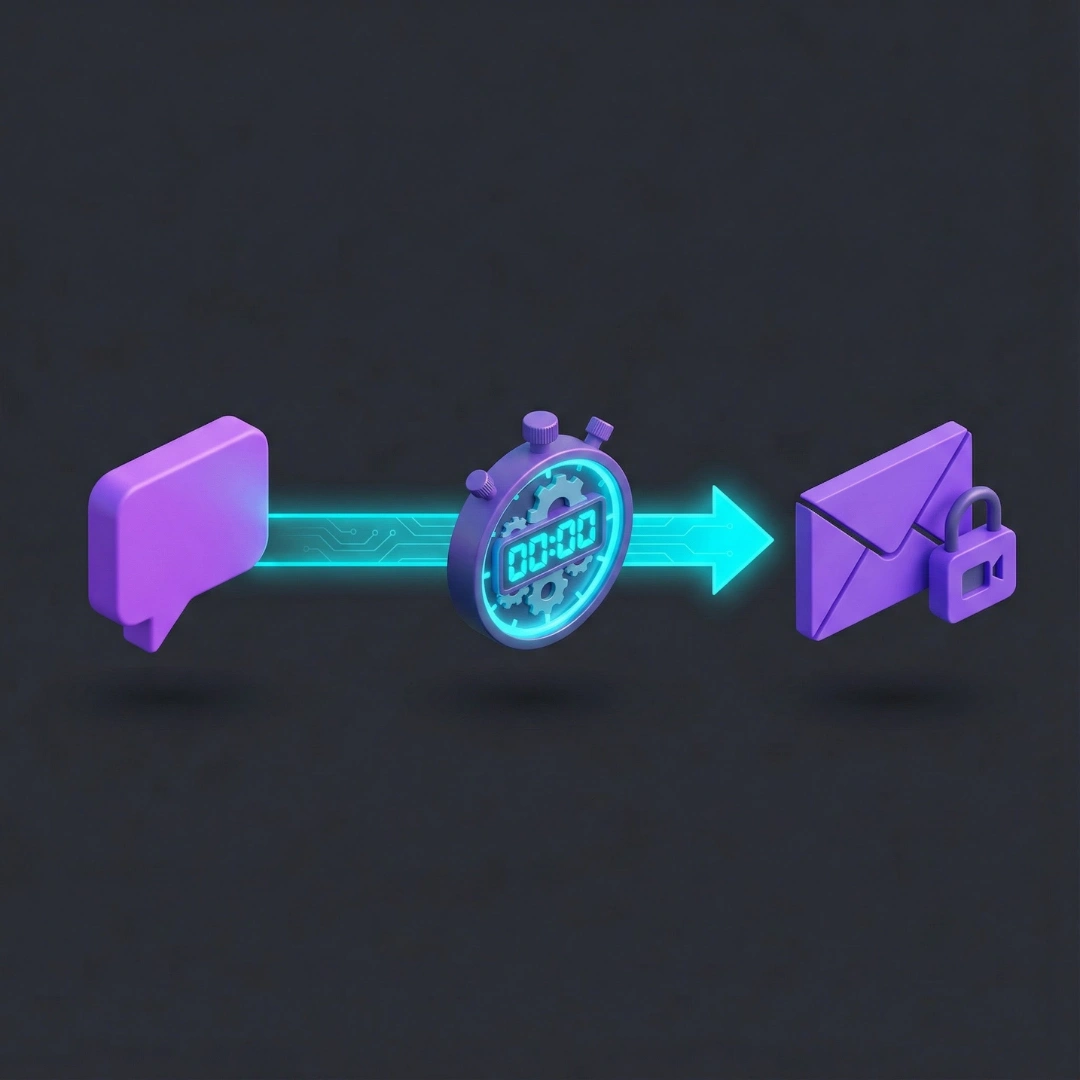
Your Handoff Protocol must be precise. When a prospect leaves a comment indicating a pain point, the protocol is not to reply with “Thanks!” The protocol is to move the conversation to a direct message (DM) or a call within 15 minutes. This is the Commercial Pivot, taking the conversation from a public forum to a private sales environment.
Measuring What Matters: The 'Revenue-Based' Scorecard
To grade your social selling strategy, you must stop reporting on followers and impressions. Those are vanity metrics.
A Revenue-Based Scorecard tracks:
- Pipeline Generated: The total value of deals where the first touchpoint was social.
- Speed to Lead: The average time taken to pivot a social comment into a DM.
- High-Intent Conversions: The percentage of Social SQLs that book a meeting.
Conclusion
The era of “posting and hoping” is over. To survive in 2025, B2B lead generation in the UK must transition from broadcasting to deal-making. By respecting the Dark Funnel, adopting a Zero-Click strategy, and executing a ruthless Commercial Pivot, you can turn your social media presence into a reliable revenue engine.
You do not need another PDF download. You need to fix your sales process. Schedule a Strategy Call with our team today, and let us build your social selling infrastructure.